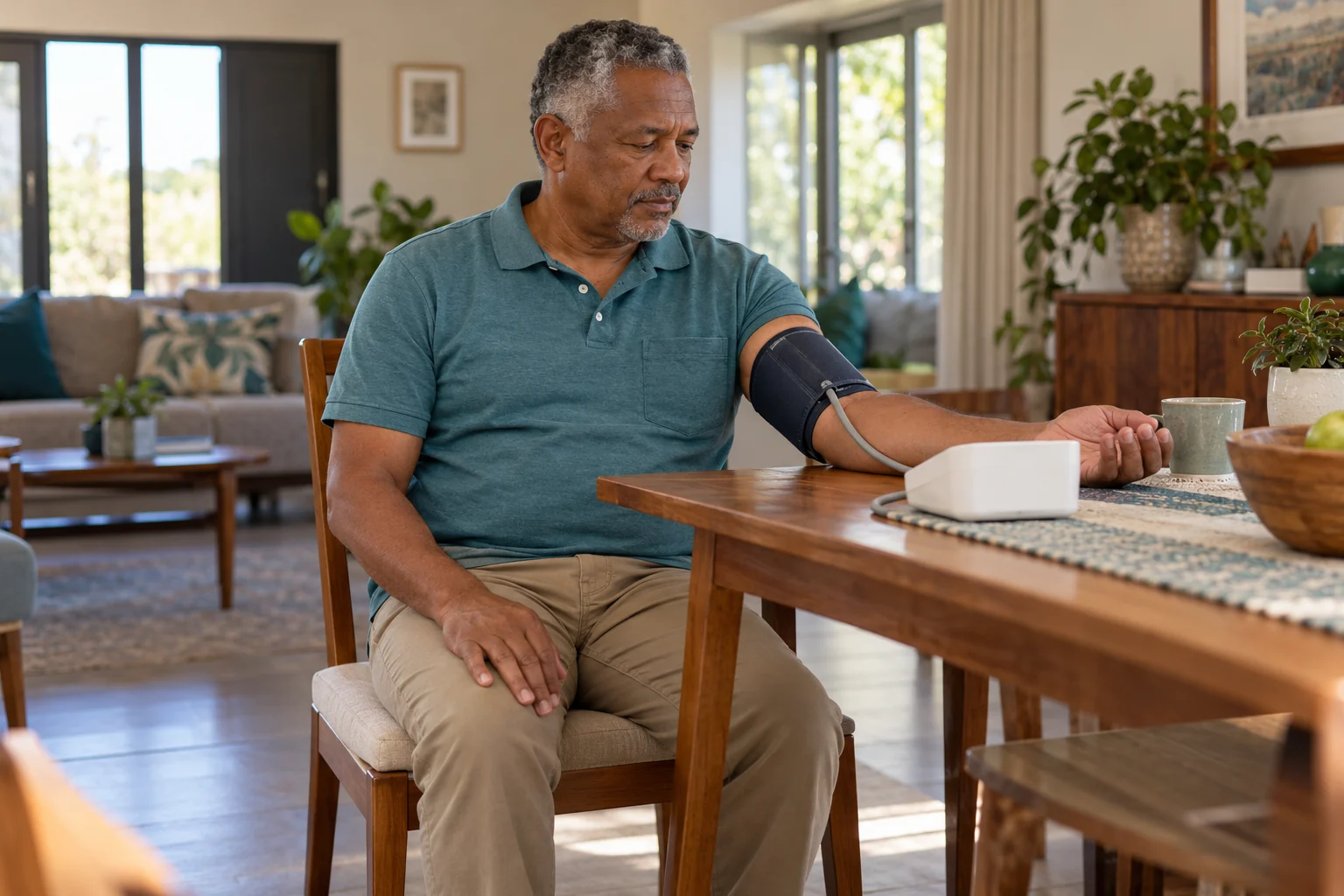
How to Check Blood Pressure at Home and Understand Your Readings
Good technique and a clear record make home readings more useful. Learn how to prepare, what to write down and when symptoms require urgent care.
Home blood pressure readings can support diagnosis and treatment review when measured correctly. A single number, especially during stress or illness, is only part of the picture. Agree with your clinician how often to measure and what action to take.
Choose equipment that fits
Ask about a validated upper-arm monitor and the correct cuff size. A cuff that is too small or too large can distort results. Bring the device to an appointment if you need help checking technique or comparing readings. Wrist devices and phone apps should not be assumed equivalent to a suitable arm monitor. If buying a device in South Africa, ask a pharmacist about validation, cuff options and support rather than choosing solely by advertised smart features.
Make each reading comparable
Sit quietly before measuring, with your back supported, feet flat and arm supported at heart level. Put the cuff on bare skin and avoid talking during the measurement. Recent exercise, caffeine, smoking and a full bladder can affect readings, so follow the preparation advice supplied by your clinician and device. Take repeat readings as instructed, leaving time between them. Consistency is more helpful than repeatedly measuring until you get a number you prefer.
Record the context as well as the number
Write down both numbers, pulse if recorded, date, time and any relevant symptoms. Mention missed medicine, pain or unusual circumstances. Share the full record rather than only the highest or lowest result. Home and clinic thresholds can differ, and targets depend on individual health, so ask what range applies to you. Do not double a dose, skip treatment or borrow a medicine because of one reading. Seek advice about repeated unexpected measurements or device errors.
Have a clear urgent-care plan
A very high reading accompanied by chest pain, severe breathlessness, sudden weakness, trouble speaking, confusion or severe visual disturbance requires urgent emergency assessment. Do not spend time repeatedly checking at home while these symptoms continue. If readings are repeatedly very high without symptoms, obtain prompt clinical advice. During pregnancy or soon after birth, blood pressure concerns and symptoms such as severe headache need urgent assessment through the maternity team. Ask for written instructions so you know when to call, attend a clinic or seek emergency care.
Key Takeaways
- Use a validated monitor with the correct cuff.
- Rest and use consistent measurement technique.
- Share a series of readings and their context.
- Severe symptoms require emergency care regardless of a home reading.
Sources & further reading
General health information; speak with a qualified healthcare professional for advice about your own care.